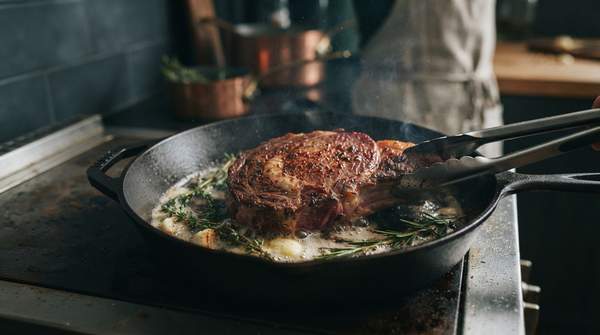
Often described as a pleasant "brothy" or "meaty" taste, umami is the fifth basic taste alongside sweet, sour, salty, and bitter. It provides a long-lasting, mouthwatering sensation that enhances the overall palatability of food. While its scientific discovery has roots in Japanese cuisine, the principle behind this complex flavor is a universal tool for any home cook seeking to create richer, more satisfying dishes. The key lies not just in using umami-rich ingredients, but in understanding how to combine them to create a flavor far greater than the sum of its parts through a process known as umami synergy.
What is Umami? The Fifth Basic Taste
Long before it had a name, cooks intuitively harnessed umami. The fermented fish sauces of ancient Rome and the rich meat stocks defined by French gastronome Brillat-Savarin were early examples of its application. The formal identification of umami began in 1908 when Japanese professor Kikunae Ikeda isolated a distinct savory compound from kombu seaweed. He named this taste "umami," a term derived from the Japanese word for "deliciousness," and identified its source as the amino acid L-glutamate. Despite this discovery, it took nearly a century for umami to be fully accepted by the global scientific community.
The term was officially recognized in 1985 at the first Umami International Symposium, but final validation came later with the identification of specific umami receptors on the human tongue. Modern science confirms that umami taste is produced by specific chemical compounds. The primary driver is L-glutamate, one of the most common amino acids. However, two other compounds, a class of 5'-ribonucleotides, also play a crucial role: inosinate (IMP) and guanylate (GMP). While glutamate provides the foundational savory taste, these nucleotides act as powerful enhancers, unlocking a deeper level of flavor.
The Science of Umami Synergy: Greater Than the Sum of Its Parts
The most powerful application of umami in the kitchen comes from combining ingredients rich in glutamate with those rich in nucleotides. When these different compounds are present in your mouth simultaneously, a remarkable interaction occurs on the tongue's taste receptors. According to an explanation from America's Test Kitchen, the nucleotide changes the shape of the glutamate receptor, allowing it to send a much stronger savory signal to the brain. The publication likens this effect to "switching from AM radio to HD audio." This synergistic effect is not a subtle enhancement.
When glutamate and nucleotides are present in roughly equal amounts, the perceived intensity of the umami flavor can be 20 to 30 times greater than what glutamate would produce on its own. This principle explains why so many classic food pairings are deeply satisfying. A classic Italian tomato sauce (rich in glutamate) becomes profoundly more complex with the addition of anchovies (rich in nucleotides). Similarly, a simple beef burger gains immense depth when topped with sautéed mushrooms, as the inosinate in the meat combines with the guanylate in the mushrooms.
Processing for Peak Umami: Fermentation and Aging
Many of the most potent umami ingredients derive their flavor from processing techniques like fermentation and aging. In their natural state, many foods like milk, wheat, and soybeans contain high levels of glutamate, but it is bound within proteins and has no taste. Processes like fermentation break down these proteins through proteolysis, releasing the glutamate into its "free" form, which our taste receptors can detect. This is why fermented products like soy sauce and miso are packed with savory flavor, containing free amino acids, nucleotides, and small peptides that are all taste-active. Similarly, aging and curing have a concentrating effect on umami compounds.
As cheeses like Parmesan age or meats are cured, their proteins and nucleic acids break down, increasing the concentration of free glutamate and flavor-enhancing nucleotides. Yeast extracts, such as Marmite, are another prime example. In their production, yeast cells are intentionally broken apart through a process called lysis or autolysis, which releases their savory contents and creates a concentrated source of umami. These techniques transform relatively bland raw materials into flavor powerhouses.
Umami Synergy Pairing Guide
To create the most impactful savory flavors, the goal is to combine an ingredient from the glutamate-rich column with one from the nucleotide-rich column. This framework provides a simple method for building deep, complex flavor in sauces, soups, stews, and main courses. Think of it as building a bridge between the two categories to multiply the savory effect in any dish you create.
| Glutamate-Rich Ingredients | Nucleotide-Rich Ingredients |
|---|---|
| Tomatoes (especially paste and ketchup) | Cured Meats (bacon, prosciutto, ham) |
| Soy Sauce & Miso | Anchovies & Preserved Fish |
| Aged Cheeses (Parmesan, Roquefort) | Mushrooms (especially dried shiitake) |
| Kombu (seaweed) | Meat & Fish Stocks |
| Yeast Extracts (Marmite, Vegemite) | Shellfish (oysters, shrimp) |
| Fish Sauce & Oyster Sauce | Chicken & Pork |
Elevate Your Cooking with Umami Synergy
The most effective way to elevate your home cooking is to move beyond thinking of umami as a single ingredient and instead embrace the principle of synergy. Home cooks should intentionally combine ingredients from the glutamate-rich and nucleotide-rich categories to unlock significantly deeper and more complex savory flavors in their dishes. By pairing a glutamate source like tomato paste or soy sauce with a nucleotide source like mushrooms or cured meat, you are not just adding two flavors together—you are multiplying their impact. The result of this practice is a noticeable increase in the "savory deliciousness" and depth of flavor in your cooking.
The next time you find a dish is tasting flat or one-dimensional, consult the pairing guide. A spoonful of miso stirred into a beef stew, a few minced anchovies melted into a pasta sauce, or a sprinkle of Parmesan over a mushroom risotto can provide the synergistic boost that transforms a good meal into a great one. This conscious pairing is the technique behind many of the world's most beloved dishes and is a reliable method for making your own food more memorable and satisfying.
Sources
- Umami the Fifth Basic Taste — PMC
- The Science of Umami | What’s Eating Dan? — America's Test Kitchen
- The Real Reason Bacon and Eggs Taste So Good Together — Epicurious
- Exploring Umami: Beyond the Quintessential Flavor Clash — Bodegas Lustau
- Chemical and Sensory Characteristics of Soy Sauce: A Review - PMC
- Practicalities from Culinology®: How Umami Can Contribute to Culinary Arts and Sciences — SpringerLink