Achieving a steak with a deeply browned, flavorful crust is a hallmark of skilled cooking. This coveted result comes not from a mythical process of "sealing in juices," but from understanding and controlling a specific chemical reaction. The key to that perfect sear lies in mastering the conditions that foster the Maillard reaction, a process that transforms the surface of the meat into a complex tapestry of savory flavors and aromas.
For decades, a common belief has held that searing meat at high temperatures creates an impermeable crust that locks moisture inside. However, scientific analysis tells a different story. Research into the properties of seared beef steak concludes that searing does not improve the juiciness of the meat. In fact, one study noted that beef samples seared at 193°C for one minute had a slightly higher cooking loss (30.8%) compared to un-seared samples cooked at a lower temperature (27.5%). The true, and significant, benefit of searing is the development of flavor through the Maillard reaction, which produces a more desirable taste profile than other cooking methods like oven-roasting alone.
The Science of Searing: Unlocking Flavor with the Maillard Reaction
Searing is the technique of cooking the surface of food at a high temperature to create a caramelized crust. This browning is the visible evidence of the Maillard reaction, a chemical process that occurs when the amino acids and sugars in meat are exposed to heat. As they react, they create hundreds of new aroma and flavor compounds that give seared meat its characteristic deep, savory, and complex taste. This reaction is the fundamental reason searing is a critical step for developing rich flavor.
The enemy of this reaction is moisture. For the Maillard reaction to occur efficiently, the surface of the meat must be dry and the cooking temperature high enough to rapidly evaporate any remaining surface water. If the surface is wet, the pan's energy will be spent turning that water into steam, effectively boiling the surface of the meat rather than searing it. This prevents the temperature from rising high enough to initiate the browning and flavor development that defines a proper sear.
Your Decision Framework for a Perfect Sear
Mastering the sear is a process of controlling variables. By making deliberate choices at each stage, you can create the ideal conditions for the Maillard reaction to thrive, resulting in a consistent, flavorful crust every time.
Step 1: Meat Preparation
Success begins long before the steak hits the pan. According to one meat scientist, allowing the meat to sit at room temperature for about 45 minutes helps it cook more evenly. The most critical step, however, is ensuring the surface is completely dry. Blot the steak thoroughly with a paper towel right before cooking. For those who plan ahead, salting the steak and leaving it uncovered in the refrigerator for up to 24 hours acts as a dry brine. This process not only seasons the meat more deeply but also draws moisture from the surface, creating a perfectly dry exterior primed for browning.
Step 2: Pan and Heat Management
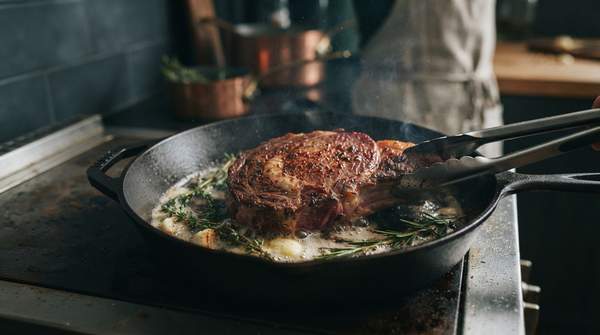
A heavy skillet, such as cast iron, is ideal because it holds and distributes high heat effectively. The pan must be hot enough to vaporize moisture instantly and initiate the Maillard reaction. While specific temperatures vary, the goal is to maintain a consistently high surface temperature throughout the searing process. This ensures that the meat begins to brown immediately upon contact, without stewing in its own juices.
Step 3: Searing Technique
While many cooks sear a steak by letting it sit untouched on each side, an alternative technique can yield superior results. A method developed by America's Test Kitchen involves flipping the meat frequently, about every two minutes. This approach allows for the development of a rich crust without overcooking the interior. When one side of the steak is flipped up, the intense heat it has absorbed begins to dissipate into the air, while the other side makes contact with the hot pan to sear. This constant rotation builds a deep, even crust gradually—likened to applying multiple coats of paint—while managing the internal temperature more gently for a more evenly cooked result.
Achieving Searing Mastery: Your Next Steps
To consistently achieve a perfect sear, your decision should be to apply the scientific principles of the Maillard reaction and moisture control. This involves a deliberate focus on meticulous meat preparation, proper pan selection, and precise heat management. By abandoning the myth of "sealing in juices" and instead concentrating on creating a dry surface and maintaining high heat, you can reliably trigger the chemical reactions that produce exceptional flavor.
The measurable indicator of your success will be a deep, even brown crust across the entire surface of the meat, accompanied by a rich, savory aroma. This sensory feedback is direct evidence of a successful Maillard reaction, signifying that you have transformed a simple piece of meat into a profoundly more flavorful meal.