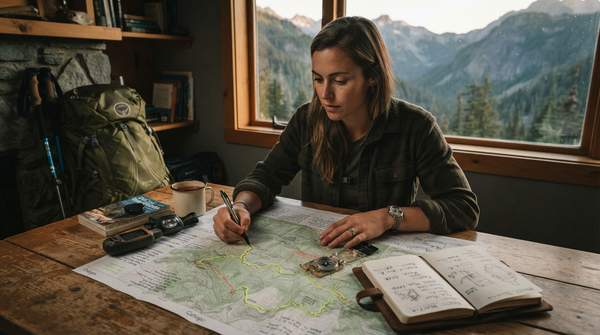
Planning a first multi-day hike comes down to making a sequence of dependent decisions rather than memorizing a pile of tips. Decide how much time you have and how far you want to go, and that choice narrows your route; the route's length and difficulty then dictate your gear, your food, and how fit you need to be. This guide walks through that process in four stages—parameters, route, gear and food, and final safety checks—plus the physical preparation that runs alongside it. It is written for beginners sticking to established trails, and it does not cover off-trail navigation, mountaineering, or winter conditions.
Multi-Day Hike Planning Decision Framework
The framework below shows how each stage feeds the next. Work through it in order, and let each row's decision constrain the one beneath it.
| Planning Stage | Key Action | Why It Comes Here |
|---|---|---|
| 1. Trip Parameters | Decide how much time you have and how many miles per day you can realistically tackle | These two factors narrow your destination options before anything else |
| 2. Route Selection | Sketch the big-picture route first, then refine day-by-day details; study it for hazards and backup options | A route matched to your parameters keeps daily mileage within your time constraints |
| 3. Gear and Food | Build a gear list and food plan sized to the route, including a first-aid kit tailored to your medical needs and an extra day of food | Route length and terrain determine pack weight, water needs, and meals |
| 4. Final Preparations | Check gear condition, confirm footwear fit, coordinate shared gear, and lay everything out against a checklist | Last-minute tasks are determined by the answers you gave in earlier stages |
By the end, you should hold a personalized trip plan outline: a chosen route type, a corresponding gear and food list, and a final pre-trip safety checklist. The sections that follow fill in each row.