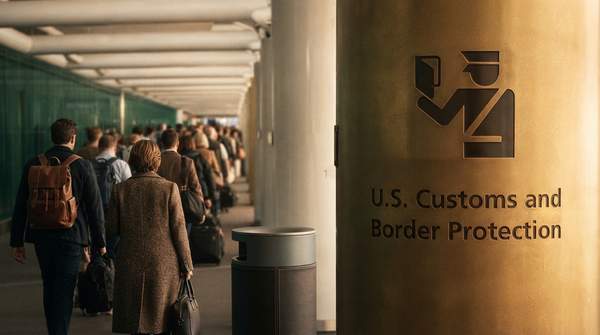
A smooth entry into the United States usually comes down to two things: having the right documents ready before you land, and knowing what happens between the gate and the airport exit. U.S. Customs and Border Protection inspects every person arriving at a port of entry, so the process is not optional—but with preparation, travelers can move through it without surprises. This guide walks through the full sequence, from paperwork to baggage claim, for international visitors. It does not cover how to apply for a visa or ESTA, and it is general guidance rather than legal advice; requirements vary by citizenship and purpose of travel, so always confirm current rules on the official CBP and Department of State websites before flying.
Preparing for U.S. Entry: Your Essential Checklist
Preparation starts with the passport. Some countries require that your passport have at least six months of validity remaining before it expires, so check the expiration date early. Foreign citizens visiting the United States generally need a visa, chosen according to the purpose of the trip, unless they qualify for the Visa Waiver Program, in which case an approved ESTA authorization is what permits travel to a U.S. port of entry. One point matters enough to underline: CBP itself notes that ESTA authorization does not decide whether you are admissible—the final call belongs to the CBP officer you meet on arrival.
Expect to provide a U.S. visiting address, since airlines transmit passenger manifest data through the Advance Passenger Information System, which requires reporting the visiting address of all customers who are neither U.S. citizens nor U.S. residents. A provisional I-94, the record that proves legal visitor status, can be applied for in advance. Student travelers should also carry supporting documents such as a university admission letter and financial information, per guidance from George Mason University's Office of International Programs and Services.
U.S. Entry Document and Declaration Checklist
The table below consolidates the documents and declarations mentioned across official and travel-industry guidance into one pre-departure verification list. Work through it before your trip: every row either names a document to carry or a category of goods to consider declaring on arrival.
| Stage | Item or Action | Details |
|---|---|---|
| Before departure | Valid passport | Some countries require at least six months of remaining validity; check the Department of State guidance. |
| Before departure | U.S. visa or ESTA authorization | Visa type depends on travel purpose; ESTA applies to Visa Waiver Program travelers. Authorization alone does not guarantee admission. |
| Before departure | U.S. visiting address | Required for APIS manifest reporting for non-U.S. citizens and non-residents. |
| Before departure | Provisional I-94 (optional) | International visitors can apply in advance; the I-94 record is proof of legal visitor status. |
| Before departure | Supporting documents (students) | Admission letter, financial documents, university address. |
| Before departure | Review restricted items | Check CBP rules for food, plants, medication and agricultural products before packing. |
| Before departure | Customs Declaration Form 6059B | Required of all travelers; declare agricultural products, currency over $10,000 USD, and merchandise beyond personal use. |
| Before departure | Electronic devices | Back up data before travel and keep devices charged and accessible in carry-on luggage. |
The U.S. Travel Association, which publishes an entry guide for inbound visitors, adds a behavioral dimension to this list: know your full itinerary, declare all items truthfully, and understand the conditions of your visa. Failing to declare restricted goods can lead to penalties.
Arriving at a U.S. Port of Entry: Initial Steps
After deplaning, follow signs to the Customs and Border Inspection site in the terminal area. Everyone arriving at a U.S. port of entry—no exceptions—is subject to inspection, and CBP officers conduct the immigration, customs and agriculture components of that inspection. Ohio State University's Office of International Affairs, which prepares returning students and staff for this process, describes typical inspections as consisting of document checks, questions about your travel and, potentially, a luggage examination.
Processing times vary, particularly during peak travel periods, so the student-focused insurer ISO advises leaving generous time between connecting flights. Keep every document in a single folder or travel pouch so nothing needs to be excavated from a checked bag or the bottom of a backpack while a line waits behind you. Travelers who depart from one of the fifteen air Preclearance locations—mostly in Canada and Ireland, plus Aruba, the Bahamas, Bermuda and Abu Dhabi—complete this inspection before boarding rather than after landing.
The CBP Inspection: What to Expect
The inspection itself is a short interview. You will present your passport and visa or ESTA, state your reason for entering the United States, and answer questions about your travel. Be prepared, the U.S. Travel Association's guide warns, for questions about your past U.S. travel and your visa or ESTA history, including specific dates, locations and timelines. Students should say plainly that they are entering to study and provide their university address.
Conduct matters here. ISO's guidance is practical: maintain appropriate eye contact, listen carefully, speak clearly, and if you are unsure what an officer is asking, politely request that the question be repeated. Avoid appearing distracted or fidgety. Patience and cooperation are the working strategy—stay calm, follow the officer's instructions, and do not leave the inspection area without your passport stamped, as student guidance from George Mason emphasizes for F-1 visa holders.
Understanding Secondary Inspection
Some travelers are referred to what CBP calls a secondary inspection—an advanced screening conducted beyond the primary booth. Ohio State's step-by-step guide describes it as rare but possible, and the right response is the same as at the primary line: remain calm and answer every question truthfully. The stakes, however, differ by citizenship. U.S. citizens hold an absolute right to re-enter the country; non-citizens detained during a secondary inspection do not, and the guide recommends that such travelers may wish to speak with a lawyer.
Electronic devices can be part of this screening. Back up your data before traveling, pack devices in carry-on luggage, and keep them accessible and charged—an officer may ask you to turn them on and show their content. The guide notes that while U.S. citizens are not required to unlock their devices when asked, CBP has the right to take devices for further inspection. Non-citizens should assume cooperation may be requested.
Customs Declaration and Exiting the Airport
The last stage is the customs declaration. All travelers complete Customs Declaration Form 6059B, and the U.S. Travel Association lists three categories that must be declared: agricultural products including food and plants, currency over $10,000 USD, and merchandise beyond personal use. ISO adds that travelers may also need to declare medication, purchases, gifts, alcohol and tobacco. When in doubt, declare—the guide's list of prohibitions is short and instructive: never misrepresent information, never fail to declare restricted goods, never attempt to work or study without the proper visa, and never overstay your authorized period.
After the declaration, collect your checked bags and pass through the customs area, where officers may inspect luggage. Exit, and you are in the United States. The whole sequence, often casually called "going through customs," is really two linked inspections—immigration and customs—plus the declaration that connects them.
Your Smooth Entry Decision
To ensure a smooth and confident entry into the United States, international travelers should meticulously prepare all required documents and understand each step of the customs and immigration inspection process before their journey. The measurable indicator of success is simple: a traveler successfully navigates the U.S. port of entry without unexpected delays or issues related to documentation or declarations. Verify your passport validity, visa or ESTA status and declaration categories against official CBP and Department of State requirements specific to your citizenship and travel purpose before departure day, and keep this checklist in your travel folder so every item is confirmed in one pass.
Sources
- For International Visitors — U.S. Customs and Border Protection
- UNITED
- Member Resource: U.S. Entry Guide on International Inbound Travel — U.S. Travel Association
- How To Smoothly Pass Through Customs When Entering the US — ISOA
- Travel to the US: U. S. Customs and Border Protection (CBP) - Office of International Programs and Services
- U.S. Customs - A Step-by-Step Guide — OIA