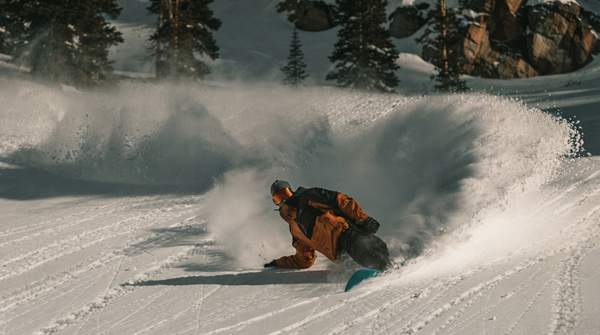
The binding choice facing most snowboarders comes down to two systems: traditional strap-in bindings and rear-entry (also called speed-entry) bindings. Strap-ins are the most common type on the mountain and reward you with the most adjustability and response. Rear-entry bindings trade some of that fine-tuned control for fast, low-effort entry and exit. Pick strap-ins if control and customization drive your riding; pick rear-entry if convenience at the top of every run matters more.
Traditional Strap-in Bindings: Control and Customization
Strap-in bindings are the design that has been around since the beginning of snowboarding, and they remain the most common binding style on the market today. The concept is simple: your boot sits on a baseplate with a highback behind it, and a toe strap and an ankle strap with ratchets cinch the boot down securely.
What makes strap-ins so enduring is adjustability. REI's expert guide notes that strap bindings feature multiple adjustment options to fine-tune fit, and that they work with a wide range of boots and riding styles. That combination of a secure, customizable fit and direct boot-to-binding connection is why they suit all riding styles and ability levels, from first-season beginners to aggressive freeriders.
The trade-off is time and effort at the moment of entry. Buckling and unbuckling the straps can be cumbersome and time-consuming, especially when you are wearing gloves or riding in cold conditions. Sitting down in deep snow to ratchet in, run after run, is the price you pay for that level of control.
Within the strap-in category, quality and features vary widely, as UtahSkis's binding guide points out—the design has evolved considerably over the years with different materials and feature sets. So even after committing to strap-ins, you still have meaningful choices about build quality and refinement.
Rear-Entry (Speed-Entry) Bindings: Convenience on the Mountain
Rear-entry bindings attack exactly the weakness of strap-ins: the strapping process itself. Their defining characteristic, according to Tactics' buying guide, is a folding or hinging highback that reclines to let your boot slide in from the back, then locks upright to secure you. Gnu and Flow are the most recognizable manufacturers of rear-entry designs today.
At first glance, these bindings look similar to strap bindings. Some use two independent toe and ankle straps; others use a single large panel that extends across the top of the boot. The difference is how you get in: rather than ratcheting straps down over your foot, you drop the highback, step in, and snap it back up.
The payoff is speed and ease. Rear-entry systems aim to blend the control and support of traditional strap bindings with the quick, easy use associated with step-in systems of the past, as Tactics describes it. For casual riders, beginners, and anyone who values quick transitions—parents wrangling kids at the base, riders who unstrap on flat catwalks—this convenience is a genuine quality-of-life upgrade on the mountain.
The honest downside is the mirror image of the strap-in strengths. Because some designs rely on a single panel or yoke-style pressure system rather than independently adjustable straps, you get less fine-tuned control over fit and response. Riders who want to micro-adjust ankle and toe pressure separately may find that limiting.
Snowboard Binding Systems: A Comparative Overview
The table below lays the two systems side by side across the criteria that actually drive the decision: how you get in, who each system suits, and what you gain or give up. Read it as a decision framework—if convenience rows matter most to you, lean rear-entry; if the control rows matter most, lean strap-in.
| Binding Type | Entry Mechanism | Best For | Pros | Cons |
|---|---|---|---|---|
| Traditional Strap-in | Toe and ankle straps ratchet down manually over the boot on a baseplate with a highback | All riding styles and ability levels, thanks to adjustability and control | Multiple adjustment options for fine-tuning fit; works with a wide range of boots and riding styles; most adjustability and response | Buckling and unbuckling can be cumbersome and time-consuming, especially with gloves or in cold conditions |
| Rear-entry (Speed-entry) | Folding or hinging highback reclines so the boot enters from the back, then locks upright | Casual riders, beginners, and anyone prioritizing convenience and quick transitions | Fast, low-effort entry and exit; aims to blend strap-binding control with step-in ease | Less fine-tuned control and response than strap-ins; some designs use a single panel rather than independent straps |
One dimension the table cannot settle for you is flex. REI's guide advises matching your binding flex to your riding style and ability level, and that guidance applies within either system—you can find softer and stiffer versions of both strap-in and rear-entry designs. Treat flex as a second, independent decision you make after choosing your entry system.
Making Your Choice: Convenience vs. Control
Every expert guide lands on the same core trade-off, and it is worth stating plainly: you are choosing between maximum adjustability and control on one side, and on-mountain convenience and speed of entry on the other. Neither system wins outright. The right answer depends entirely on what you do between the lift and the run.
Ask yourself where you lose more during a day. If you resent every minute spent sitting in snow, fighting ratchets with gloved hands, rear-entry's reclining highback solves that problem directly. If instead you notice sloppy response in turns, or you cannot get your boot locked down exactly the way you want it, the independent straps of a traditional binding are the tool for that job.
Riding style tilts the answer too. Riders who charge hard and want precise, immediate response from heel to toe tend toward strap-ins, which is part of why they remain the default for all styles and ability levels. Riders whose priority is simply getting out on the mountain with minimal friction—especially newer riders still figuring out their stance—get more day-to-day value from rear-entry speed.
Two boundaries on this guide: it compares binding systems, not specific models or brands, so use it to narrow your category before reading individual reviews. And it does not address splitboard bindings or board mounting-pattern compatibility, both of which deserve their own research before you buy.
Choosing Your Binding: Prioritize Convenience or Control
Select a binding type based on your primary riding priority: if quick entry/exit and ease of use are paramount, opt for rear-entry; if maximum adjustability, response, and control are essential for aggressive riding, choose traditional strap-in bindings.
Then test the decision against something you can actually observe. The measurable indicator is the ease and speed of strapping in at the top of a run, or the precision and responsiveness felt during turns and tricks. Spend a few days on your chosen system and judge it on those two measures—if entry is still a chore or turns still feel vague, you have concrete evidence of which direction to adjust your next purchase.