When a product tag reads "500D Cordura with PU coating," it is telling you three things: how thick the fibers are, which fabric family you are dealing with, and how it keeps water out. Those three variables—denier, weave or laminate construction, and coating—determine nearly everything that matters in a backpack or shell garment: how it resists abrasion, whether a small tear stays small, how much it weighs, and how it handles rain. The short version: Cordura leads on abrasion resistance, ripstop nylon offers the best balance of tear resistance and weight, and X-PAC delivers inherent waterproofness through its laminated construction. Dyneema Composite Fabric trades exceptional strength-to-weight for cost and rigidity, but this guide focuses on the three fabrics you will see most often on spec sheets.
Understanding Fabric Specifications: Denier, Weaves, and Coatings
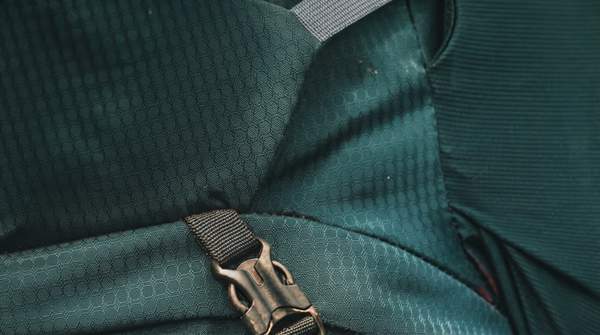
Denier describes the thickness of the individual fibers in a fabric. A higher denier means heavier, thicker threads, as fabric supplier Rockywoods explains. That is why a 70D or 100D ripstop suits an ultralight backcountry pack where every ounce counts, while 210D or 420D fabrics trade some weight for significantly better abrasion resistance on base panels and high-wear zones, according to Light Hiking Gear's materials guide.
The ripstop weave is the other half of the equation. Thicker threads are woven into a grid every few millimeters, so if the fabric does tear, the reinforcement stops the tear from spreading. As Light Hiking Gear puts it, the fabric is called "rip stop" rather than "rip proof"—the weave contains damage, it does not prevent the initial puncture. That distinction matters: puncture resistance still depends on the base fiber and its denier.
Water resistance usually comes from two layers. A durable water repellent (DWR) finish on the exterior makes nylon highly water-repellent, while a polyurethane (PU) or silicone coating on the inside face adds water resistance without much weight. Both have limits: DWR treatments wear off over time and need reapplication, and PU coatings can add stiffness and degrade with prolonged UV exposure or flexing.
Ripstop Nylon: The Lightweight Workhorse
Ripstop nylon remains the most common fabric in the hiking backpack world, and for good reason. Its reinforced grid gives it excellent tear resistance for its weight, and it is often chosen for the balance of strength, weight, and cost it offers. You will find it in rain jackets, tents, sleeping bags, and lightweight apparel as well as packs.
The fabric's weakness is abrasion. Compared to Cordura or ballistic nylon, ripstop nylon—especially at lower deniers—has limited abrasion resistance under heavy use. The quality range is also enormous: an industrial fabric supplier notes that nylon is versatile and quick-drying, but the same nominal weave can vary widely between a budget bag and a premium one. Variants narrow the gap: some ripstops use stronger Nylon 6.6 fibers, and hybrid weaves like Ultragrid incorporate UHMWPE (the fiber family behind Dyneema) for significantly higher tear resistance, according to DIY gear-making resources.
Read the denier against your use case. A 70D ripstop is breathable and light yet still serviceable for gentle use. A 210D or 420D ripstop belongs on the base and contact zones of a pack built for rough terrain.
Cordura: The Standard for Abrasion Resistance
Cordura is a family of nylon and polyester fabrics engineered specifically for abrasion resistance, originally developed for military and industrial gear. Carryology's textile history calls it "the gold standard for durability"—highly abrasion-resistant, color-fast, and trusted by militaries and first responders. The catch is packability: it is not particularly packable and can feel stiff until it breaks in.
The engineering behind that durability is partly in the fiber. Cordura fibers are often air-textured, giving them a slightly fuzzy surface that resists cuts better than smooth nylon of the same denier. Denier still governs the ceiling: an industrial supplier notes that 1000D nylon has greater tear, puncture, and abrasion resistance than 500D, though both are highly durable.
Do not assume you need the biggest number. Rockywoods describes 500D Cordura as lighter than ultra-heavy 1000D while still offering strong abrasion, tear, and puncture resistance—a balance that explains why it appears in everything from rugged daypacks to military gear. Carryology reports that Dana Gleason's team helped drive the US military's switch to 500D for most packs, citing its tear strength, weight-to-strength ratio, and low water retention. In a Martindale-style abrasion test run by bag manufacturer Orient Bag, both 500D and 1050D nylon showed only slight wear after 25,600 cycles—though the tester noted the method was not aggressive enough to separate very tough fabrics.
X-PAC: The Laminated Performance Fabric
X-PAC takes a different approach: instead of relying on a coating, it is a laminate that sandwiches a ripstop grid and a waterproof film between a face fabric and a backing. Because there is no woven gap for water to penetrate, it is waterproof by construction rather than by treatment. Common types include VX21 (210D face) and VX07 (70D face), offering different levels of durability.
The construction brings trade-offs. X-PAC is lightweight, waterproof, and tear-resistant, but it is stiff, does not fray at edges, and absorbs no water—qualities that make it a favorite for ultralight backpacks, bike bags, and high-performance gear where waterproofness and strength-to-weight are critical. It also tends to cost more than coated nylons. Specific properties depend on the exact series (VX, X, RS) and its layers, so check which laminate a product actually uses.
Fabric Performance at a Glance: Ripstop Nylon, Cordura, and X-PAC
The table below compares the three fabric families across the dimensions that drive a purchasing decision. Read it against your priority: maximum abrasion resistance points to Cordura, balanced tear resistance and weight to ripstop nylon, and inherent waterproofness to X-PAC.
| Fabric | Primary Strength | Primary Weakness | Common Uses | Water Resistance | Typical Denier |
|---|---|---|---|---|---|
| Ripstop Nylon | Excellent tear resistance; reinforced grid stops tears from spreading | Lower abrasion resistance than Cordura, especially at low deniers | Hiking backpacks, tents, lightweight apparel | DWR finish plus PU or silicone coating | 70D–420D |
| Cordura Nylon | Gold-standard abrasion, tear, and puncture resistance | Heavier and bulkier; stiff until broken in | Rugged packs, military gear, high-wear base panels | PU coating (often with DWR) | 500D–1000D |
| X-PAC | Inherent waterproofness and tear strength from multi-layer laminate | Stiff; more expensive than coated nylons | Ultralight backpacks, bike bags, high-performance gear | Built-in waterproof film (no coating needed) | VX07 (70D)–VX21 (210D) face |
Two qualifications keep this comparison honest. First, the ripstop grid addresses tear propagation, not initial puncture resistance. Second, abrasion performance varies significantly with denier and fiber type—a 1000D Cordura outlasts a 70D ripstop, but a 500D Cordura already offers substantial durability at a more manageable weight.
Making Your Choice: Selecting the Right Fabric for Your Adventure
Choose a fabric based on the primary demands of your activity: prioritize Cordura for extreme abrasion, ripstop nylon for balanced tear resistance and weight, or X-PAC for inherent waterproofness and stiffness. For bushwhacking, scrambling, or a pack that will be dragged across rock and gravel, a 500D-or-higher Cordura base panel is the proven choice. For long-distance hiking where weight dominates but you still need tear insurance, a 100D–210D ripstop nylon with a PU coating fits the mission. For bikepacking or wet climates where waterproofness cannot depend on a coating that wears down, a laminate like X-PAC VX21 earns its premium.
Before you buy, check that the gear's fabric specifications—whether "500D Cordura," "210D Ripstop Nylon," or "X-PAC VX21"—align with your intended use and expected environmental conditions. That single line on the spec sheet is your most reliable indicator of how the product will actually hold up.
Sources
- What Is 500D Cordura, and Why Is It So Popular? — Rockywoods Fabrics
- Backpack Materials 101: Ripstop Nylon, Dyneema, and What Actually Holds Up on Trail — Light Hiking Gear
- The 3 Best Fabrics To Use Outdoors — Industrial Fabric Supplier
- The Ultimate Guide to Fabrics for Your DIY Outdoor Gear — MYOG Tutorials by Prickly Gorse Gear
- The Fascinating History and Science Behind Backpack Textiles — Carryology
- Abrasion Resistance Test - 600D Polyester, 500D Nylon & 1000D Nylon — Orient Bag