The single biggest determinant of how a suit jacket looks, drapes, and ages is hidden inside its chest: the interlining. Fused jackets glue that layer to the fabric, making them the cheapest but least durable option. Half-canvassed jackets stitch a canvas layer through the chest and lapels, striking the most practical balance for most wearers. Full-canvassed jackets stitch canvas throughout, delivering the best drape and decades-long durability at the highest cost. Here is how each works and how to pick.
Introduction: Why Suit Jacket Construction Matters
When men evaluate a suit, fit and fabric get all the attention. But as Black Lapel's tailoring guide puts it, "when it comes to determining the overall quality of a suit, construction plays a large role." The construction method determines whether the jacket molds to your body over years or goes stiff and bubbly after a few dry cleanings.
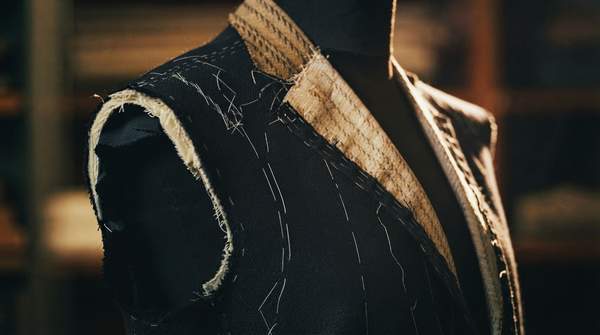
Every jacket has an interlining between the outer cloth and the lining. That layer gives the chest its shape and the lapels their roll. The question is how it is attached: glued (fused), partially stitched (half-canvas), or fully stitched (full-canvas). Each approach carries direct consequences for drape, longevity, comfort, and price.
Fused Construction: The Entry-Level Option
In a fused jacket, the interlining is bonded to the outer fabric with adhesive. This is the least labor-intensive method, which is why fused suits are generally the most affordable on the rack. If your budget is tight or you wear a suit only occasionally, a fused jacket covers the basics.
The trade-offs are structural. Because there is no floating canvas, the jacket feels stiffer and flatter, with a pressed lapel crease rather than a natural roll. The bigger risk is time: the glue can degrade or separate, causing visible bubbling and delamination. Oliver Wicks' comparison is blunt on this point—while modern manufacturing has reduced the bubbling risk that once ruined fused jackets, the house still regards fully fused garments as a poor long-term investment.
Half-Canvassed Construction: The Versatile Middle Ground
A half-canvassed jacket stitches a canvas layer—typically covering the chest and lapels—while the lower portion of the jacket remains fused. This puts structure where it matters most: the chest holds its shape, and the lapels roll properly, so the upper jacket reads as a quality garment.
The benefits are real but bounded. The stitched canvas lets the jacket drape naturally over your shoulders and chest, moving more comfortably than a fused garment. It is also lighter than a full-canvas jacket, which some men prefer in warmer weather. Enzo Custom offers a candid caveat: because the lower jacket still relies on fusing, the same separation that affects fully fused garments can eventually affect the lower half. "The longevity is improved, not solved," and any maker marketing half-canvas as equivalent to full canvas is overstating the case.
Full-Canvassed Construction: The Pinnacle of Drape and Durability
Full canvas is the traditional method, used in bespoke tailoring for centuries. A canvas layer—made from materials like horsehair, wool, mohair, or camel hair—is stitched throughout the front of the jacket rather than glued. The result is a softer feel and a structure that floats independently of the shell cloth.
The advantages compound over time. A full-canvas jacket drapes elegantly, and because the canvas is stitched rather than bonded, the garment molds to your body, creating a personalized fit. Woolrich Bespoke Tailor notes it is considered ideal for people who wear suits frequently, and that the canvas helps the suit cope with the rigors of dry cleaning. Hive & Colony attributes its superior resilience to the absence of adhesives and the hand-stitched construction throughout. The costs: it is the most expensive to produce, and it feels somewhat heavier than half-canvas or fused alternatives.
Suit Jacket Construction Comparison
The table below consolidates the evidence into a side-by-side view. Read across each row to see how the three methods trade off against one another.
| Dimension | Fused | Half-Canvassed | Full-Canvassed |
|---|---|---|---|
| Structure & Feel | Interlining glued to the fabric; stiff, flat feel | Canvas stitched through chest and lapels; lower part fused; structure where it matters most | Canvas of natural fibers and horsehair stitched throughout; superior structure with a soft feel |
| Drape & Fit Over Time | Does not mold to the body; can lose shape | Natural drape over shoulders and chest; defined lapel roll; slightly stiffer than full canvas | Molds to your body over time; the best possible lapel roll |
| Durability & Longevity | Least durable; glue degradation causes bubbling and delamination | More durable than fused, but the fused lower section can still bubble over time | Most durable; no adhesives, withstands repeated dry cleaning, can last decades |
| Typical Cost | Cheapest to produce, thanks to less labor-intensive manufacturing | Medium-priced; less material and labor than full canvas | Highest cost; the most labor-intensive method |
| Best For | Tight budgets and infrequent wear | The versatile standard for quality suits; warm-weather wearers who want less weight | Frequent wearers seeking the very best drape and a lasting investment |
One pattern emerges clearly: every step up the ladder buys you better drape and longer life, and every step down buys you savings. Half-canvas occupies the middle on every dimension—including its weaknesses, which blend the strengths and flaws of both neighbors.
Choosing Your Suit Jacket: A Decision Framework
Map your own priorities onto the comparison to reach a decision:
- Budget first. If cost is the binding constraint, fused is the entry point. If you can stretch to a mid-range budget, Black Lapel argues half-canvas maximizes value: you get the major benefits of full canvas—good chest drape and a nice lapel roll—at a lower price.
- Frequency of wear. Occasional wearers can accept fused construction's shorter lifespan. Frequent wearers benefit from canvas: half-canvas improves longevity over fused, while full canvas is regarded as the choice for men who wear suits often, because it conforms to the body and tolerates dry cleaning.
- Fit and drape preference. If a molded, personalized fit matters most, full canvas is the only method that delivers it fully. If you want natural upper-body drape without the premium, half-canvas is the practical compromise.
- Climate and comfort. Half-canvas is lighter than full canvas, which some men prefer in warmer weather. Full canvas feels somewhat heavier but moves seamlessly with the body thanks to its fully floating structure.
Note the scope here: this framework covers jacket construction only. Fabric quality and tailoring details also shape a suit's performance, and cost figures are relative ranges rather than specific brand pricing.
Making Your Choice: Aligning Construction with Your Priorities
Choose a suit jacket construction method—fused, half-canvassed, or full-canvassed—that best matches your budget, desired longevity, and aesthetic preferences. The evidence points to a clear default: half-canvas is the versatile standard that most wearers should choose, full-canvas is the investment for frequent wearers who want the best drape and decades of service, and fused suits a tight budget or occasional use. The measurable indicator of success is that you confidently select a suit jacket construction type based on your personal priorities when shopping or commissioning a suit—and before you buy, ask the retailer or tailor directly which construction the jacket uses.
Sources
- Suiting 101: An Introduction to Suit Jacket Construction — Black Lapel
- Full Canvas vs Half Canvas - Oliver Wicks — Oliverwicks
- Suit Canvas Construction Details — Enzo Custom
- Woolrichbespoketailor
- Understanding Suit Construction: Half-Canvas vs. Full-Canvas — Hiveandcolony