If you listen mostly on a smartphone or laptop, choose low-impedance headphones—typically 16 to 32 ohms. If you use a dedicated headphone amplifier or studio equipment, higher-impedance models (roughly 80 to 600 ohms) can deliver their best performance. The impedance rating, printed in ohms on the spec sheet, tells you how much electrical resistance the headphones present and how much power your source must supply. Get the match right and you get full volume and clean sound; get it wrong and you get quiet, lifeless audio even with the volume maxed out.
What Is Headphone Impedance?
Impedance is the measure of a headphone's resistance to the electrical current flowing from your device. The part that matters physically is the voice coil—a coil of thin copper wire connected to the diaphragm, the membrane that actually moves air and creates sound. As the headphone maker beyerdynamic explains, the lighter that coil is, the clearer and more precise the transducer sounds. But a lighter coil is made of thinner wire, and thinner wire means greater resistance—in other words, higher impedance.
That creates the central trade-off. The coils that produce the most precise sound are also the hardest to drive. Not every source can supply the voltage needed to overcome that resistance and make the diaphragm vibrate properly, which is why the device you plug into determines which headphones will actually work well for you.
How Impedance Affects Sound Quality and Volume
Impedance shapes two things you can hear: how loud your headphones get, and how stable their tonal balance is. Low-impedance headphones are more sensitive to the electrical signal from your source, so they reach louder volumes with less power, as soundcore's technical explainer puts it. High-impedance headphones need more power to hit the same volume, which is why they suit dedicated amplifiers with robust output.
Impedance also interacts with your device's own output characteristics. According to Shokz's guide, high-impedance models usually maintain more stable tuning, while low-impedance headphones are more affected by the connected device, which can subtly change the sound balance—especially in the bass and lower midrange. Soundcore adds that some headphones may show changes in frequency response or distortion at higher volumes due to impedance variations. Frequency response, in simple terms, describes which frequencies a headphone reproduces and at what relative level; impedance mismatches can skew that balance even when the raw spec sheet looks fine.
Headphone Impedance Matching Guide
Use this table to match your primary listening device to the right impedance class before you buy. The reasoning is straightforward: portable devices output low voltage, so they pair with headphones that need little power; amplifiers output enough power to drive demanding, higher-impedance designs.
| Audio Source Device | Recommended Impedance Range | Power Needs & Performance | Potential Mismatch Issues |
|---|---|---|---|
| Smartphones & portable players | Low: 16–32 Ω | Reach high volume despite the device's low output voltage | High-impedance models stay quiet even at maximum volume |
| Laptops & computers (onboard audio) | Low: 16–32 Ω | Efficient power draw from lower-voltage onboard audio | High-impedance models sound underpowered and quiet |
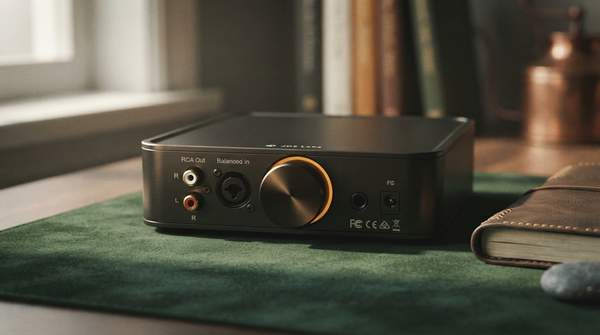
| Dedicated headphone amplifiers / high-end audio interfaces | Medium: 32–80 Ω; High: 80–600 Ω | Amps supply the extra power these models need for optimal volume and sound quality | Low-impedance models may be affected by the amp's output impedance, subtly altering sound |
One benchmark for what "enough power" means: Wirecutter's testing by Brent Butterworth found most headphones and practically all earbuds produce at least 100 decibels from just 1 milliwatt—a loud enough level for almost anyone. Portable amps he measured ranged from 27.7 mW to 255 mW, though those figures come from specific tested units and won't represent every amplifier on the market.
Low Impedance Headphones: Ideal for Portable Devices
Low-impedance headphones, generally in the 16–32 ohm range, are built for the devices most of us carry every day. Smartphones, tablets, and laptops all deliver lower output voltage than professional audio equipment, as the microphone maker LEWITT notes, so they pair best with headphones that can reach high volume despite that limitation.
The practical payoff is simple: you plug in, press play, and get satisfying volume without carrying extra gear. The trade-off is that these headphones are more sensitive to the output characteristics of whatever they're plugged into, so their sound can shift slightly between devices—something to keep in mind if you switch sources often.
High Impedance Headphones: For Amplified and Studio Setups
High-impedance headphones—commonly 80 to 600 ohms—exist because of that voice-coil trade-off. Their thinner, lighter coils can produce more precise, detailed sound, but they demand a source with real power behind it. Soundcore's guidance is that they're well suited to dedicated headphone amplifiers or audio equipment with robust output capabilities.
There's a second advantage worth knowing. LEWITT explains that high-impedance headphones work with a wider variety of amplifier output impedances without their sound being affected, while low-impedance headphones generally require an amplifier with low output impedance to sound as intended. In a studio or desk setup with proper amplification, that stability—combined with the precision of the lighter coil—is the whole appeal.
What Happens with an Impedance Mismatch?
The most common mismatch is plugging high-impedance headphones into a phone or laptop. The result is exactly what you'd fear: LEWITT's advice is blunt—try it with a laptop, and even at maximum volume it will not be loud enough. The device simply cannot supply the voltage to overcome the headphones' resistance.
The reverse mismatch is subtler. Low-impedance headphones driven by an amplifier with a higher output impedance may not sound broken, but their tonal balance can shift, particularly in the bass and lower midrange, leaving the sound feeling underpowered or unbalanced in daily use. Neither failure means the headphones are bad; it means the pairing is wrong.
Choosing the Right Impedance for Your Setup
Select headphones with an impedance rating that matches the power output capabilities of your primary audio source device. If that's a phone or laptop, stay in the 16–32 ohm range; if it's a dedicated amplifier or high-end interface, medium and high-impedance models become worthwhile. The measurable indicator of a proper match is optimal volume levels and clear, balanced sound without distortion or weakness in bass. If your current headphones sound quiet at full volume or thin in the low end, an impedance mismatch is the first thing to check—before you blame the headphones themselves.
Sources
- What impedance should I choose for my headphones? — beyerdynamic Blog
- Headphone Impedance: What It Is and How It Affects Audio — soundcore
- Headphone Impedance Meaning: Effects on Sound and Compatibility — Shokz
- This Little Gadget Can Make Your Wired Headphones Sound Better — Wirecutter: Reviews for the Real World
- What is impedance in headphones? — LEWITT