Ask what a movie genre is and you get a deceptively simple answer: a category. The useful answer is structural. A film genre is built from recurring conventions across narrative, theme, and visual style, and those conventions form a tacit agreement between filmmaker and audience about what kind of story is being told. This article builds a working comparison of three foundational genres—Crime, Science Fiction, and Film Noir—so you can move from recognizing a genre to analyzing how it is constructed.
Understanding Film Genre: More Than Just a Label
A film genre, as film-studies references broadly describe it, is a stylistic or thematic category for motion pictures based on similarities in narrative elements, aesthetic approach, or emotional response. Genres are usually delineated by conventions, iconography, settings, narratives, and characters. Crucially, genre is not just a filing system: audience expectation plays a key role in creating generic structures. Genre films work, as one widely cited characterization puts it, by telling familiar stories with familiar characters and familiar situations through repetition and variation.
The practical unit here is the convention. As Rafael Abreu's genre-writing guide at StudioBinder explains, conventions are specific elements used to create and identify genres: plot beats and narrative turns that must almost always occur, characters and settings that are staples of the genre, and tropes and themes that recur nearly every time. Conventions give viewers a framework to process what they're watching—and give directors license to satisfy or deliberately subvert expectations.
Foundational Genres: A Comparative Look
Three genres reward close comparison because they share a family resemblance while diverging sharply in construction. Crime, Science Fiction, and Noir all frequently traffic in danger, moral difficulty, and shadowed worlds, but each solves the storytelling problem differently. An open educational text on movie construction notes that story treatment, character background, plot, and setting are the big differentiators separating genres—each reflective of different types of characters and worlds. That is the lens used throughout this article: what drives the plot, what the story is about, and what the camera shows you.
Comparative Framework: Foundational Film Genres
The table below compares the three genres across the same three dimensions—narrative conventions, thematic elements, and visual style—so the differences stand out rather than blur together. Read each row as a set of tendencies, not rules: any individual film can subvert or combine them.
| Genre | Narrative Conventions | Thematic Elements | Typical Visual Style |
|---|---|---|---|
| Crime | Investigations and the actions of criminals or detectives; protagonists seeking power over a city, gang, or trade, with periods of violent action in pursuit of that goal | Moral ambiguity; the complexities of justice and revenge | Urban settings, dark lighting, a gritty atmosphere |
| Science Fiction | Speculative premises involving advanced technology, extraterrestrial life, or dystopian futures, with a scientific factor as an essential orienting component | The impact of actual or imagined science on society or individuals; future societies, space travel, artificial intelligence | Futuristic settings, advanced technology on display, striking visual effects |
| Film Noir | Detective- and crime-adjacent stories conventionally built around investigation and moral entanglement | Cynicism and ambiguity within crime situations | High-contrast shadow lighting—noir's visual language of darkness |
Two qualifications matter. Genres are dynamic, not fixed: as one narrative-design resource emphasizes, categories evolve as filmmakers adapt established traditions to changing cultural circumstances. And the Noir row deserves a note: while its shadowy visual language is explicitly cited as a genre's associated visual element, its narrative and thematic cells rest on the genre's traditional association with crime stories and cynical tone rather than on a single parallel source—so treat that row as convention-level shorthand.
Crime Films: Investigations, Morality, and Urban Shadows
What drives a crime narrative is power. In the genre textbook examples of criminal-empire stories, the criminals want control—over the drug trade, gambling, liquor, or their position within a family or gang—and there are always periods of violent action as the protagonist pursues that goal. Alongside the empire-building mode sits the investigation mode: detectives, evidence, and the pursuit of justice or revenge. Either way, the plot engine is transgression and consequence. Thematically, the genre keeps returning to moral ambiguity, and visually it tends toward urban settings, dark lighting, and a gritty aesthetic that makes the city itself feel complicit.
Science Fiction: Technology, Future, and Humanity's Impact
Science fiction shares crime's fascination with danger, but its basic theme is different: it is about the impact of science on society and individuals. The genre textbook cites the Merriam-Webster Dictionary defining science fiction as fiction dealing principally with that impact, or having a scientific factor as an essential orienting component. That "essential orienting component" is the key analytic point—the science is not set dressing but the engine of the plot, whether the premise involves artificial intelligence, space travel, or a dystopian future society. Visually, the genre is defined by futuristic settings and advanced technology, frequently rendered with striking visual effects.
Film Noir: Cynicism, Ambiguity, and Stark Contrasts
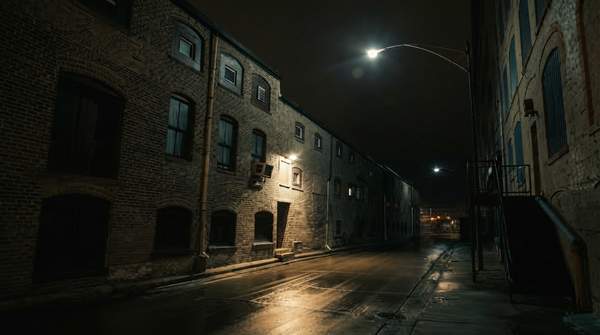
Noir is best understood as a mood and a look grafted onto crime-adjacent stories. Its visual signature is the most cited in any list of genre languages: shadows, hard contrasts, darkness itself as atmosphere. Thematically, noir is conventionally associated with cynicism and moral ambiguity—crooked motives, compromised decisions, endings that don't tidy up. What makes noir useful for analysis is precisely how much of its identity lives in the image: two stories with the same plot skeleton read differently when one is lit flatly and the other is carved out of shadow. Style, here, is theme.
Applying the Framework: Deeper Film Analysis
Here is how to use this. When you watch a film, ask three questions: What drives the plot—power, science, or investigation? What does the story keep arguing about—justice, technology's impact, or human motives? And what does the camera do—grit, futurism, or shadow? Then ask whether the film satisfies the conventions or subverts them, because as Vancouver Film School's genre guidance puts it, the goal "is to know which promise leads the project – and make each major creative choice with that promise in mind." Films can also be multi-genre, giving relatively equal weight to the narrative and thematic components of two or more established genres rather than minor borrowed elements.
Enhance Your Cinematic Understanding
By recognizing the core narrative, thematic, and visual conventions of foundational film genres, you can move beyond passive viewing to actively analyze and appreciate the craft of filmmaking. The test is simple and measurable: the reader can identify and articulate at least two distinct conventions (narrative, thematic, or visual) for a film they watch, correctly attributing them to a specific genre. The next time a movie grips you, pause and ask which promise leads it—and whether the film honors that promise or deliberately breaks it.
Sources
- Film genre - Wikipedia
- Genre Conventions — The Building Blocks of Genre Storytelling — StudioBinder
- Milnepublishing
- Film Genres and Conventions: Types and Examples — NICE Narrative Design
- A Guide to the Basic Film Genres (and How to Use Them) — The Beat: A Blog by PremiumBeat
- Movie Genres: Types of Film & Genre Examples — Vancouver Film School